

Introduction
A few wasps flying around the garden may not seem particularly concerning. The situation changes, however, when you notice dozens of them repeatedly disappearing into the same roof gap, shed opening or wall cavity. This usually means there is more happening than an occasional insect passing through your property.
Wasp nests can develop surprisingly close to areas used every day. A nest near a back door, patio or business entrance can quickly become an inconvenience and a potential safety issue. Understanding what to look for and when to call a professional can make dealing with the problem much easier.
Where Are Wasp Nests Commonly Found?
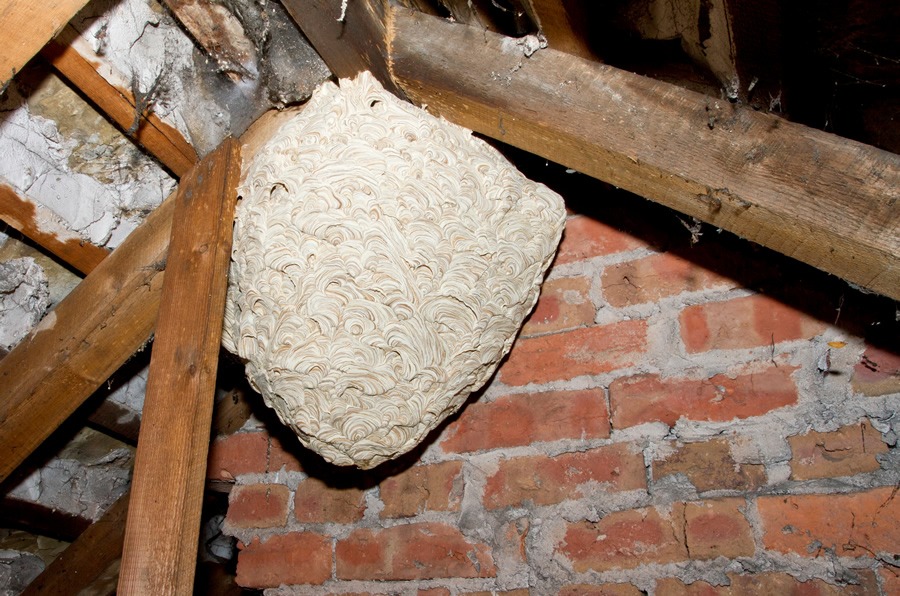
Wasps prefer protected places where their colony can develop with limited disturbance. Around homes, suitable locations can include:
- Loft and roof spaces
- Roof edges and eaves
- Garages
- Sheds
- Wall cavities
- Sheltered outdoor structures
- Areas around entrances and openings
The actual nest may sometimes be hidden from view. Instead of seeing the nest itself, you might notice wasps consistently flying into a small crack or hole.
That is why unusual insect activity should not automatically be dismissed simply because the nest cannot be seen.
From Occasional Wasps to an Established Nest
There is an important difference between seeing a wasp and identifying a colony.
An isolated wasp may simply be looking for food. Several wasps repeatedly using the same entrance suggest something different. If the number of insects increases over time, there may be an established nest nearby.
Pay attention to patterns rather than individual sightings.
For example, if wasps appear around your garden during lunchtime, that alone may not indicate a nest. But if you observe continuous traffic to a specific roof gap throughout the day, investigating the source becomes sensible.
Why Location Matters More Than Nest Size
People often judge the seriousness of a wasp problem by looking at the size of the nest. Location can actually be more important.
A nest hidden at the far end of an unused garden may present less immediate risk than a smaller nest beside your main entrance.
Consider how frequently people pass the area.
A nest near:
- A front or back door
- A children’s play area
- A patio
- A workplace entrance
- An outdoor dining area
- A pathway
deserves particular attention because accidental contact is more likely.
Should You Remove a Wasp Nest Yourself?
This is one of the first questions many property owners ask.
DIY pest control products are widely available, but treating an active nest is not simply a matter of spraying an insecticide. The person approaching the nest can be exposed to defensive wasps, particularly if the colony is disturbed.
Height can create another hazard. A nest positioned under roof tiles, high eaves or another elevated location may require ladders or awkward access.
For these reasons, professional treatment is often the more sensible option when a nest is established or difficult to reach.
What Happens When You Call a Wasp Exterminator?
The first stage is generally an assessment of the problem.
A professional Wasp Exterminator will consider where wasps are entering and leaving, where the nest appears to be located, how accessible it is and how much activity is present.
The treatment approach can then be selected according to the circumstances.
Professional pest control is valuable because technicians are accustomed to dealing with different pest environments. Their work is not based solely on removing the visible portion of a nest.
The wider objective is to deal with the infestation effectively while limiting unnecessary exposure for residents and visitors.
Benefits of Using Professional Pest Control
Safer Approach
The most obvious benefit is avoiding direct contact with an active colony. A professional has suitable knowledge and protective equipment for pest treatment.
Convenience
A wasp infestation can make people avoid parts of their own property. Professional treatment allows homeowners to address the issue without spending hours experimenting with different DIY methods.
Local Experience
Local pest controllers who regularly work across an area may have extensive experience with residential and commercial pest problems.
Advice Beyond Treatment
Good pest control is not necessarily limited to the immediate problem. Professionals can provide advice about reducing access points and improving pest prevention.
Support for Businesses
For businesses, pest problems can have a wider impact. Customers may avoid areas with visible wasp activity, while staff may feel uncomfortable working close to a nest.
A prompt response can therefore help minimise disruption.
How to Make Your Property Less Attractive to Wasps
Once an infestation has been dealt with, prevention becomes the next priority.
Start with simple measures.
Keep rubbish bins closed and clean. Avoid leaving food uncovered outdoors. Clear sugary drinks, fruit and food waste from garden areas. If you regularly eat outside, clean tables and surfaces after meals rather than leaving food residue behind.
You can also inspect your property for gaps and damaged areas that could provide insects with access.
However, prevention should not involve sealing an active nest without professional advice. If wasps are currently entering a cavity, blocking their route may cause them to find another way out, potentially into an occupied section of the property.
Why Fast Action Can Be Helpful
Ignoring an active nest does not necessarily mean it will disappear on its own.
As the colony develops, wasp activity can become more noticeable. A previously quiet section of a property may suddenly become difficult to use.
Early professional advice can help determine whether treatment is necessary and how urgently the problem should be addressed.
For homeowners who discover a nest near a doorway or another busy area, waiting until the problem becomes severe is rarely the best strategy.
What Makes a Good Pest Control Service?
When choosing a company, homeowners should consider several factors rather than selecting the cheapest option available.
Look for:
Relevant Experience
Choose a provider that regularly handles wasps as well as other common household pests.
Insurance
A properly insured business provides additional reassurance that professional standards are being followed.
Industry Membership
Membership of an established industry organisation, such as the British Pest Control Association, can be another useful sign when comparing providers.
Transparent Pricing
Ask what the quoted price includes and whether follow-up treatment or guarantees apply.
Clear Communication
A good pest controller should explain the process in straightforward language rather than using unnecessary technical jargon.
Professional Wasp Nest Removal Across Chelmsford
Homeowners in Chelmsford and surrounding Essex areas can access local pest control services for wasps and other common infestations.
Local coverage may include areas such as Brentwood, Braintree, Billericay, Southend, Benfleet and Maldon, while some companies also respond to properties beyond their standard service locations.
A local team can be particularly useful when quick assistance is required.
Some pest control businesses also handle rodents, fleas, squirrels, moths, flies, pigeons and other unwanted pests. This means homeowners can often receive advice about wider pest risks during the same service.
The Cost of Ignoring a Nest
The biggest cost of leaving an active nest alone is not necessarily financial.
A nest can restrict how you use your property. You may stop opening a particular window, avoid part of your garden or ask employees to use another entrance.
There is also the possibility of someone accidentally disturbing the colony.
Taking action does not always mean immediate treatment is required. Professional advice can first establish what you are dealing with and what options are available.
Conclusion
Discovering wasps around your property does not automatically mean you need to panic. The key is recognising when occasional insect activity has developed into a genuine nest problem.
Look for repeated wasp traffic, particularly around roof gaps, sheds, garages, wall cavities and other sheltered locations. If the nest is near a busy part of your property or difficult to access, attempting DIY Wasp nest removal may create unnecessary risk.
A professional Wasp Exterminator can assess the situation, select an appropriate treatment approach and provide practical advice for preventing future problems.
Ultimately, the best pest control strategy combines effective treatment with sensible prevention. Acting early, keeping potential food sources under control and seeking professional assistance when necessary can help keep your home or business safer and more comfortable throughout the warmer months.
