

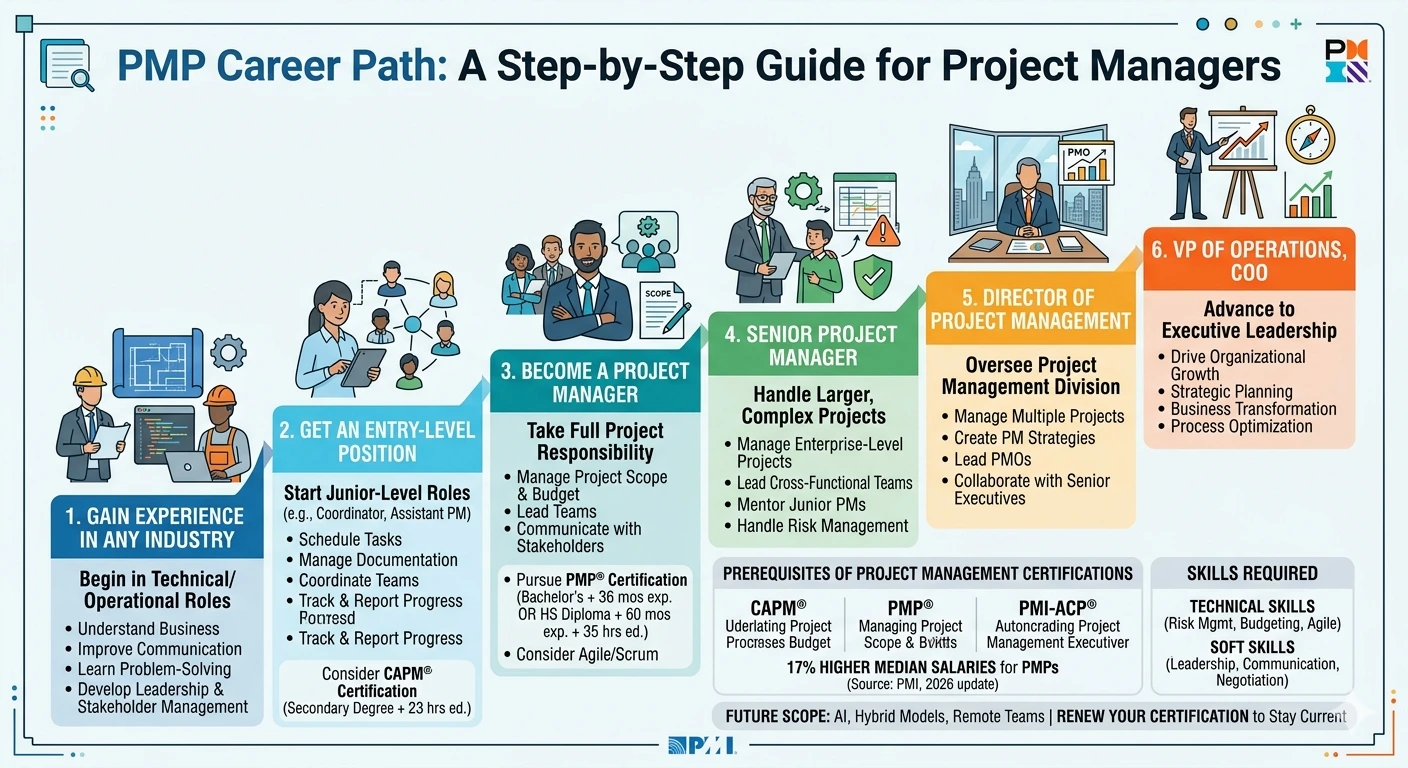
Project work rarely goes exactly as planned, as deadlines shift, priorities change, and teams face problems that need quick decisions. A project manager must handle these situations while keeping the work moving and the team focused on its goals. Learning PMP skills for project managers can help connect project management knowledge with the tasks involved in real projects. This article covers the skills needed at work, their practical use, and how they can support long-term career growth.
What Is Project Management?
A project is a piece of work with a clear goal and a set time for completion, such as building a website, installing new software, or opening an office.
A project manager plans the work, decides who will handle each task, and checks how things are going. Once the work is finished, they review the result to see if it meets the agreed needs.
Project management skills strengthened through PMP certification preparation also help when plans change. For example, a website team may be asked to add a new feature, which could mean extra time and cost. The project manager talks through these changes with stakeholders before deciding how to proceed.
What Are PMP Skills?
PMP stands for Project Management Professional, a certification offered by the Project Management Institute.
“PMP skills” refers here to the capabilities studied and strengthened during preparation, including planning, communication, risk management, leadership, and decision-making.
These abilities also develop through work experience. Preparation helps organize that knowledge, while practical application strengthens judgment about when and how to use it.
Which Skills Does PMP Preparation Help Develop?
Essential skills for project managers cover both delivery activities and the people involved. The following table explains how these capabilities support everyday work.
| Skill | How it helps a project manager | Workplace example |
| Scope management | Clarifies agreed deliverables and boundaries | Checks whether an additional feature belongs within the approved work |
| Schedule management | Organizes activities, dependencies, and deadlines | Adjusts testing dates after a development delay |
| Cost management | Supports estimating and monitoring expenses | Reviews the budget impact of higher supplier charges |
| Risk management | Identifies uncertainty and prepares responses | Arranges an alternative source for a critical component |
| Communication | Keeps people informed about progress and decisions | Explains a delay and the proposed recovery plan |
| Leadership | Supports collaboration and resolves disagreements | Helps departments agree on competing priorities |
| Stakeholder engagement | Clarifies expectations and encourages timely involvement | Confirms acceptance requirements before delivery |
| Quality management | Checks whether outputs meet agreed requirements | Establishes review criteria before approving work |
| Change evaluation | Assesses requests before revising commitments | Reviews how a new requirement affects delivery |
| Business judgment | Connects decisions to intended outcomes | Prioritizes work that supports the project’s purpose |
Together, these project management skills help professionals understand how individual decisions affect overall delivery.
How PMP Skills Help a Project Manager
PMP skills for project managers become useful through daily decisions. They support project manager roles and responsibilities by bringing greater clarity to planning, coordination, and problem-solving.
Turning Requirements Into a Clear Plan
Before building the customer portal, the team must know what to include, when it is due, and who will approve the finished work.
The project manager divides the work into smaller tasks and works out how much time each one may take. Some tasks must wait until others are finished, so this needs to be part of the plan. Once the tasks are set, everyone knows what they are responsible for and what needs to happen next.
Identifying Problems and Coordinating Responses
The project manager checks whether the work is moving according to plan and looks into anything that causes a delay.
For example, if a supplier delivers materials late, some tasks may have to wait. The manager checks which activities are affected and discusses the next steps with the team, such as changing the work order or agreeing on a new deadline with stakeholders.
Leadership skills for project managers help keep these discussions focused on practical solutions, especially when departments have competing priorities.
Evaluating Additional Requests
Project manager roles and responsibilities include explaining the consequences of change before agreeing to it.
Example of a Late Feature Request
A website is nearly ready to go live when a stakeholder asks for a reporting feature. The project manager checks with the team to see how much extra work it would take and whether the change would affect the cost, testing, or launch date.
The team can add the feature now or wait until the next update, depending on the time and cost involved. PMP skills for project managers help them choose what works best for the project.
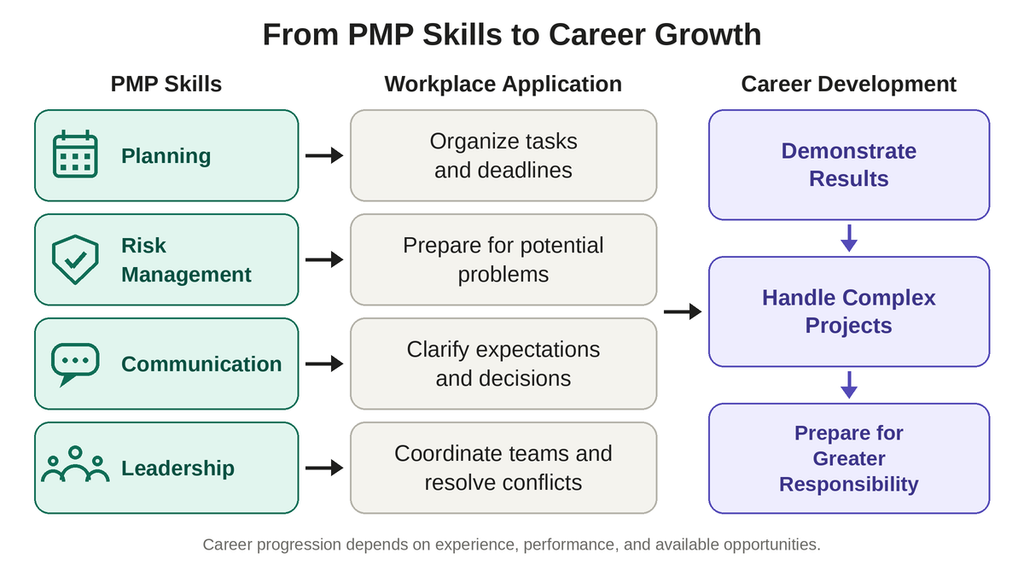
How Experience Supports Project Management Career Growth
Applying PMP skills for project managers at work helps professionals take responsibility, make better decisions, and coordinate tasks across teams. As they gain experience and learn how their industry works, they may become ready to take on larger projects or move into roles with greater responsibility.
Building Evidence of Effective Work
Completing a project will give you experience, and the situations you may have to deal with will teach you as a manager.
This could include identifying potential risks early on, resolving conflict between stakeholders, or changing the timeline based on new deadlines.
Keeping a record of the problem, the action taken, and the result makes it easier to explain this work during a performance review or job interview.
These examples also show project management career growth, as they give employers a clearer picture of the experience gained and the responsibilities handled.
Preparing for Broader Responsibilities
A project manager career path can lead to bigger projects, more team members, or work with different departments.
Career opportunities after PMP certification include senior project manager, program manager, and project management office roles, depending on work experience and skills.
PMP certification benefits may include recognition of project management knowledge, although moving into a higher role also depends on work experience, performance, and the needs of the organization.
Building Experience for the Next Career Step
Taking on unfamiliar tasks can teach project managers a lot, especially when they review what went wrong, discuss their decisions with colleagues, and try a different approach next time.
The next step in a project manager career path often depends on what a person has handled so far and what the new role requires. Checking job descriptions against existing experience can show which skills need more work, where professional development courses at SterlingNext may help, and which career opportunities after PMP certification may be worth considering.
Conclusion
Handling a project often means dealing with problems that were not part of the original plan. A deadline may change, a risk may come up, or two stakeholders may want different things. PMP skills for project managers help professionals work through these situations and decide what needs attention first. With each completed project, they gain a better sense of how to handle similar problems, support their teams, and take on work that calls for more responsibility.
