

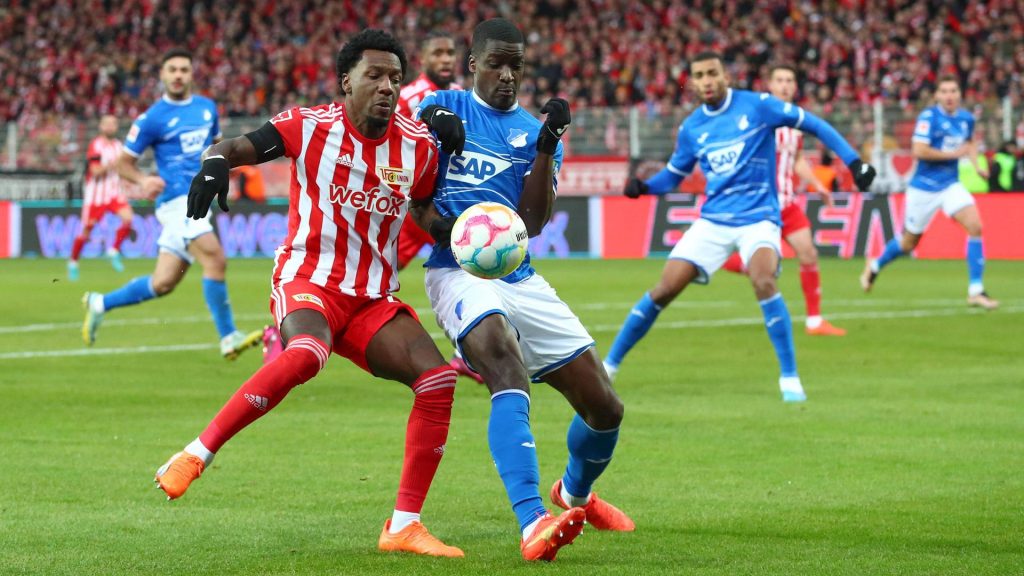
Targeting in‑form smaller clubs in the 2022/2023 Bundesliga made sense because the season’s volatility meant “big vs small” was often less one‑sided than reputations implied. When less fashionable teams hit genuine hot streaks, they combined rising performance with still‑modest pricing, creating windows where betting on them or against inflated favourites could give a better return than blindly backing giants.
What “Hot Small Team” Meant in the 2022/23 Context
A hot smaller team in 2022/23 was not simply any underdog that won once against a favourite; it was a side whose form over several rounds clearly outpaced its season-long reputation. Bundesliga coverage highlighted Freiburg and Union Berlin as surprise packages, underlining Freiburg’s 30‑point haul from the first 15 rounds and Union’s sustained presence in the top four despite modest budgets. Form tables compiled for specific segments, such as Matchdays 29–34, show Köln, Freiburg, Union and Stuttgart all ranking in the top eight over those six rounds, ahead of or alongside more storied clubs. The cause–effect link is that when these smaller teams stayed organized, kept their core players fit and maintained tactical clarity, their short-run strength became closer to that of the title contenders than pre-season odds suggested.
How Form Tables Revealed Emerging Smaller-Side Streaks
Transfermarkt’s form table for Matchdays 29–34 in 2022/23 ranks Leipzig first with 15 points, Dortmund and Bayern next, but then Köln, Union, Freiburg and Stuttgart all within a narrow range of 9–10 points. Over that slice, Köln posted three wins, one draw and two losses with a +4 goal difference, Union three wins and a draw with only seven conceded, and Stuttgart two wins and three draws, losing just once and hitting a +3 goal differential. These runs contrasted with longer‑term mid‑table positions, indicating that, for several weeks, these clubs behaved more like top‑six sides in performance terms. For bettors, spotting that divergence early in the run—through form tables or recent results—meant catching prices before bookmakers fully corrected for the new baseline.
Why Markets Often Lag on Smaller Teams’ Hot Streaks
Markets typically adjust to sustained form, but smaller clubs suffer from a reputation delay: their early wins are often dismissed as “purple patches” until the evidence becomes overwhelming. ESPN’s streak overview for 2022/23 lists Bayern with the longest unbeaten run at 13 games and Dortmund with the longest winning streak at 8, but it also records long winless spells for lesser names like Hoffenheim and dramatic streaks for Schalke, indicating how quickly narratives can swing for non‑elite teams. At the same time, official league analysis places Freiburg and Union among the season’s biggest surprises, noting how they repeatedly beat expectations despite conservative budget and squad status. The impact is that odds on these teams often remain slightly generous—especially away from home—during the first part of a hot spell, because the market mentally anchors to last year’s table more than to current‑year momentum.
Reading Match-Ups Where Hot Smaller Teams Held Real Edge
Not every game involving an in‑form small side offered value; the edge appeared strongest in specific match‑ups. When Freiburg or Union faced mid‑table or struggling teams during their strong phases, their blend of compact defending and efficient chance use often produced grind‑out wins at prices that still partially reflected their “small club” tag. Köln’s late‑season run likewise came with results over comparable or slightly stronger opponents rather than only thrashings of relegation fodder, confirming that their uptick was real rather than purely schedule‑driven. The cause–effect sequence is that hot smaller teams were most worth backing when facing opponents whose true level was only marginally higher or who were under stress from injuries, schedule congestion or poor form, narrowing the underlying gap further than the badge names suggested.
Mechanism: When Hot Form Beats Baseline Quality
The mechanism behind these temporary shifts in edge is that football outcomes are driven by both structural quality and current state: tactics, confidence, and physical freshness. A smaller team on a strong run typically benefits from settled selections, clear patterns in possession and pressing, and a group of players hitting simultaneous peaks. In 2022/23, Freiburg’s early 17‑point start in eight matches and Union’s sustained top‑four challenge reflected precisely this alignment of factors, as highlighted by Bundesliga match reports and surprise lists. Until opponents and markets fully adjust their plans and pricing, this state can outweigh modest differences in squad cost or individual talent, making the hot team temporarily under‑rated relative to its actual winning chances.
Using In-Form Small Teams Within UFABET’s Market Structure
To turn these patterns into actionable bets, some users looked not only at form but at how the odds environment framed that form on a particular weekend. In cases where a smaller club came into a match on a clear hot streak while facing a better-known opponent in mixed form, the pre‑match prices on สูตรสล็อต ufa168 sometimes still leaned heavily toward the bigger name. When the sports betting service’s match odds offered the in‑form small team at an underdog or only marginal favourite price despite their recent performance and favourable tactical match‑up, it suggested a gap between perception and reality that could be exploited. Conversely, once the same team’s form became a public narrative—heavily discussed in media and reflected in a rapid shortening of their odds—value often shifted away, either towards cautiously opposing them or toward alternative markets such as draw‑no‑bet or handicap, where the price better matched their true level.
Distinguishing Sustainable Hot Streaks from Temporary Spikes
Not every run of wins was worth riding. Long winless and losing streaks for clubs like Hoffenheim and Schalke in 2022/23 illustrate how swings can be driven as much by randomness as by genuine improvement or decline. Sustainable hot streaks from smaller teams tended to show three reinforcing signs: positive goal differences rather than narrow, luck‑heavy wins; supportive xG or shot profiles indicating that performance matched results; and stability in coaching and key player availability. In contrast, sequences built on late goals from few chances, or that coincided with opponents missing key players, carried a higher risk of reversion once conditions normalized. The practical effect is that bettors needed to cross‑check streak headlines against underlying stats and team news before trusting smaller‑team momentum as a meaningful edge.
Signals That a Small Team’s “Hot” Run Merits Betting Attention
Because human bias tends to overreact to recent wins, many bettors in 2022/23 used a small checklist to decide whether a smaller club’s good run genuinely deserved support. Each point links a specific observation to its betting implication.
- Positive goal difference over the streak (e.g., Stuttgart’s +3 and Union’s +1 across their last six matches) rather than a string of one‑goal escapes with equal or worse goals conceded.
- Stable or improving xG and shot numbers that match the win–draw–loss record, indicating performance, not just finishing runs, is driving results.
- Consistent starting line‑ups and limited injury disruption, especially in central defence and central midfield, suggesting that the run is supported by structural continuity.
- Wins or draws against a mix of opponents—including mid‑table and top‑half teams—rather than solely against the league’s weakest clubs, which would make the run more schedule‑dependent.
Interpreting these signals together helps separate small clubs that have temporarily “played up” to top‑six level from those merely enjoying a short bounce. Only the former merit being priced, in your own estimates, closer to favourites or strong underdogs than their historic badge value suggests.
When Riding In-Form Small Clubs Stopped Working
Even well‑chosen hot‑team strategies had clear failure points in 2022/23. Once bookmakers fully incorporated a smaller side’s streak into the line—reflected by them being made firm favourites against similar or weaker opposition—the margin for error shrank, making them susceptible to normal variance or minor dips in form. Fixture congestion in the spring, particularly for surprise packages involved in Europe or deep cup runs, also introduced fatigue and rotation that undercut the intensity which powered their rise. Finally, psychological pressure changed the equation: as Union and Freiburg moved from hunters to Champions League contenders, matches became framed as “must win,” sometimes pushing coaches toward more cautious approaches that reduced attacking output and altered the character of their games. For bettors, persisting with a small‑team narrative after those structural shifts meant backing an outdated version of the side, not the team currently taking the field.
Summary
In the 2022/2023 Bundesliga, betting strategies built around in‑form smaller teams were justified because the league’s competitive balance and volatility made short‑run surges by clubs like Union Berlin, Freiburg, Köln and Stuttgart genuinely impactful. Form tables, goal differences and performance metrics revealed periods where these sides operated at near top‑six level while odds remained anchored to older reputations, creating windows where supporting them on match odds or handicaps offered a positive expectation compared with the prices on offer. For profit‑oriented bettors who checked sustainability signals and monitored when the market finally adjusted, riding hot small teams became a calculated way to step beyond badge bias and align their bankroll with actual 2022/23 performance.
