

Introduction
In the field of electronics repair, faults such as motherboard short circuits, burnt-out ICs, and corrosion caused by liquid ingress place extremely high demands on a technician’s operational precision and safety protocols. Since electrostatic discharge (ESD) can instantly damage highly sensitive components, protective gear—such as anti-static wrist straps and gloves—has become a fundamental requirement for professional repair work. Adherence to standardized protective measures not only safeguards the integrity of motherboards and chips but also mitigates the potential long-term health risks associated with the repair environment, making it an indispensable and critical element of modern electronics repair workflows.
Preparation
Before starting any restoration drawings, technicians should carefully prepare each tool and work area to minimize hazards and improve efficiency Gear required Soldering iron with adjustable temperature, hot air rework station, power (preferably no-smooth resin power a that keeps hotwear, hot switches, FCBs and PCBs turned off magnification equipment such as a microscope, is usually set up between 320°C and 360°C to avoid IC, while up to four hundred°C may also be required to protect the cans depending on the thickness of the vessel
Personal protective equipment is equally important, especially anti-static gloves and an anti-static wristband attached to the ground mat. These devices prevent electrostatic aggregation associated with dealing with sensitive components. Technicians should also ensure specific and proper ventilation before starting any welding, as fumes can be harmful over the years. Better guidance no longer easily improves recovery performance gaps yet greatly reduces business capability risk in the long run.
Optimization of maintenance halls and protection layout
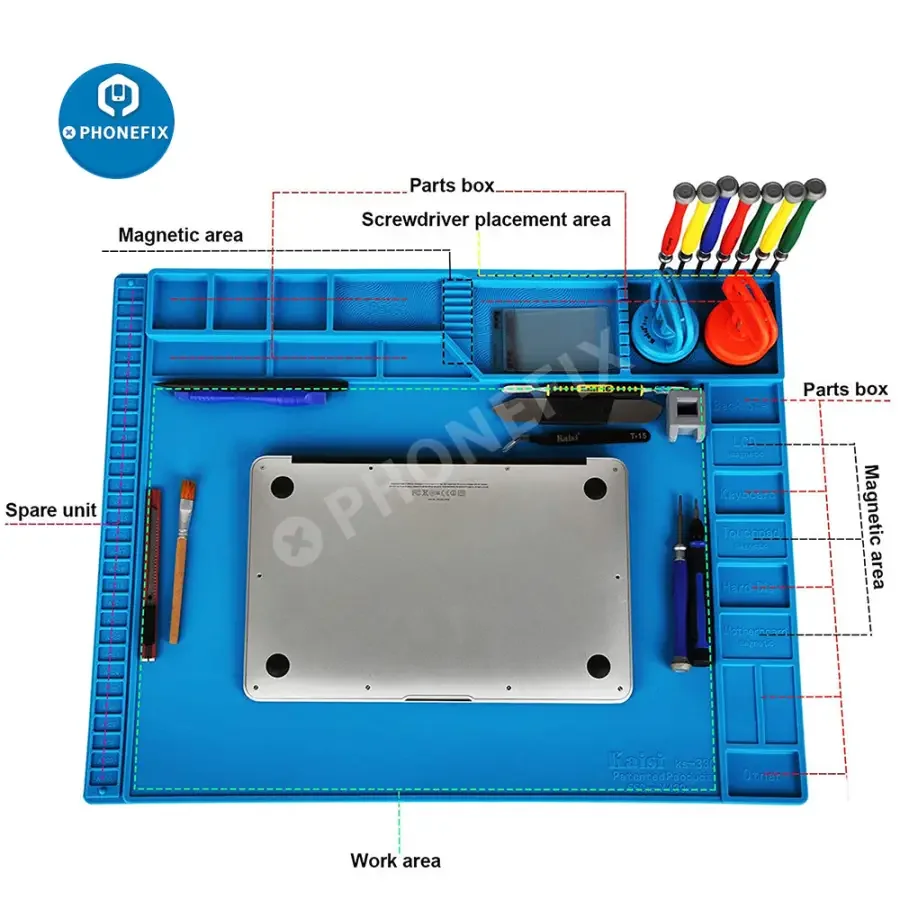
A well-optimized workspace is critical for safe and efficient recovery operations. A lightweight and organized bench with an anti-static mat reduces unintentional damage to tactile and digital connectors. Proper lighting and magnification help keep technicians away from eye strain and ensure accuracy during microsoldering tasks. In expert installations, the ventilation path and temperature additionally manage to play a key role in maintaining a strong driving condition.
Ventilation systems and proper air circulation are important to reduce exposure to hazardous fumes released at any stage of soldering and desoldering The use of fume reducers facilitates the optimization of the maintenance environment and ensures cleaner respiratory conditions through long recoveries. A properly designed workspace additionally reduces fatigue, improves accuracy, and increases the high quality of routine repairs, making it safer for technicians to deal with complex electrical faults .
Decomposition and Analysis Steps
The repair procedure begins offevolved through the use of plastic tools to keep internal connectors away from the negative and careful disassembly of the device with the blade of a precision screwdriver. Once opened by technicians, check the bottom panel on a microscope for visible damage, such as burned connectors, rust, or broken solder joints This is for checking voltage, continuity, and fast circuit, making it even easier to find the exact fault zone earlier than planned
Antistatic protection is important because even a small discharge below this level can permanently damage ICs or reminiscence chips. Technicians wearing antistatic wristbands ensure that electrical values are securely grounded even while on board. The accuracy of the diagnosis depends on standing power and proper instrumentation, as lack of this step can lead to incorrect treatment or even additional damage to the affected orbit .
soldering and factor depletion
Once the fault is detected, the wing exhaust starts offevolved the use of hot air conditioning. Small ICs such as charging chips or audio amplifiers typically use temperatures of 330°C to 360°C, while large protective covers may also require slightly higher temperature settings The current around the component is freely implemented to increase heat transfer and reduce oxidation, thus easier clearance for the PCB er.
Micro ESD tweezers are used to lift the components as soon as the solder melts. All these techniques are supported through anti-static gloves to survive away from sudden static discharges and make the grip manipulate nicely. Appropriate attitude and distance between hot air and water, generally 2–three cm above the track. Precision and temperature manipulation are also key factors in stopping table damage.
Treatment Strategies and Change Accuracy
After elements are removed, technicians facilitate the use of PCB pads by using solder wipes and isopropyl alcohol to remove any remaining solder and flux residue. In the case of broken pads or stresses, the jumper wires are carefully installed so that the connection can be restored. Reballing strategies can also be used for BGA chips, where new solder balls are made to a specific alignment under the microscope before the case is restored .
The advanced conversion requires steady fingers and proper temperature control to avoid lifting the pad or adversely affecting the proximity of components. Adhering to antistatic maintenance practices at some level ensures that touch tiles are covered all through the restoration. The use of high-quality electricity and controlled heating processes allows for increased reliability of solder joints, ensures long-term stability and reduces the risk of repeated accidents after the last touch of treatment .
Reassembly and Testing
Once all components have been repaired or replaced, the machine is carefully reassembled in reverse order, ensuring that all connectors and screws are neatly secured Before full shutdown, technicians perform a final inspection under magnification to verify that there is no foreign debris or lead debris left on board. Power lines and connectors are checked again to ensure proper installation and alignment.
They are looking at starting managed electricity using today’s finite energy resources to satisfy some unusual contemporary fascination. Multimeter analysis helps to establish strong voltage output within the conductive circuit. Functional testing is then performed with charging, overall performance feedback, and community certification to determine full restoration success. Final verification ensures that the machine is operating efficiently and effectively before it is returned to the carrier.
Conclusions:
By 2026, electronic micro-repair has evolved into a highly standardized form of precision engineering, where occupational health and chip safety protection are accorded equal importance. Through the use of anti-static wrist straps and gloves, strictly temperature-controlled soldering operations, and the integration of workshop air purification and standardized process management, the risks associated with static electricity, solder fumes, and high-temperature work environments are effectively mitigated. These regulatory measures not only enhance the success rate of motherboard repairs and the quality of deliverables but also safeguard the long-term occupational safety of technicians, thereby elevating the practice of repair from a purely experience-based craft to a systematic and safety-engineered discipline. .
