

Introduction
Lighting is an important part of how people experience and use a building. In a workplace, it can influence visibility, comfort and the way employees complete everyday tasks. In shops, reception areas and other customer-facing environments, the right lighting can also help create a welcoming atmosphere. For homes, suitable lighting makes rooms more practical while supporting different activities throughout the day.
LED lighting Telford has become a popular option for new lighting installations and upgrades. However, choosing the right system involves more than replacing an old bulb with a new one. The type of fitting, brightness, colour temperature, control options and installation requirements all affect the final result.
Understanding these factors can help property owners make informed decisions when planning a lighting improvement project.
Understanding What Makes LED Lighting Different
LED stands for light-emitting diode. Unlike traditional incandescent lamps, which produce light by heating a filament, LEDs generate light through electronic components. This difference allows LED products to produce useful illumination while consuming relatively little electricity.
LED products are available in many forms, including replacement bulbs, recessed downlights, ceiling panels, floodlights and specialist commercial fittings. This variety makes the technology suitable for numerous applications, from small domestic rooms to large workplaces and industrial buildings.
Another important feature is that LEDs are available with different light outputs and colour temperatures. Some products create a warm appearance suitable for living spaces, while others provide a cooler, more neutral light that may be appropriate for offices, workshops and other task-oriented environments.
Not every LED product is suitable for every fitting or location. Compatibility, ventilation, environmental conditions and electrical requirements should be considered before selecting a replacement.
A well-planned installation begins by identifying the purpose of the lighting and the characteristics of the space where it will be used.
Looking Beyond the Initial Purchase Price
When comparing lighting products, it is easy to focus entirely on the purchase price. However, the cost of a lighting system also includes the electricity it consumes, installation expenses and the effort required to replace or maintain its components.
LED products can offer energy savings compared with less efficient lighting technologies. The actual reduction depends on the existing equipment, the replacement product’s efficiency and how long the lights operate each day.
For example, a business operating lighting across several rooms for extended hours may have different potential savings from a household that uses its lights for shorter periods.
A useful comparison starts with the power consumption of the existing lamps and their proposed replacements. The expected operating hours can then help estimate electricity use over a typical year.
A simple calculation can help illustrate the difference:
Suppose a property replaces ten 60-watt lamps with ten 9-watt LED lamps. If each lamp operates for five hours a day, the estimated annual electricity saving is approximately 931 kilowatt-hours.
This is an illustrative calculation rather than a guaranteed saving. Actual results depend on operating patterns, product performance and the number of lamps replaced.
The calculation demonstrates why it is useful to consider both the number of fittings and the hours they remain switched on. A larger installation operating for long periods may provide more opportunities for energy savings than a small installation used occasionally.
Selecting the Correct Brightness
Brightness is one of the most important considerations when choosing a replacement light. Many people are accustomed to comparing bulbs by wattage, but wattage measures electricity consumption rather than the amount of visible light produced.
Lumens provide a more useful indication of light output. When selecting an LED replacement, checking the lumen rating can help determine whether it will provide illumination comparable to the existing lamp.
However, the correct brightness depends on the application.
A bedroom may benefit from softer lighting, while a kitchen worktop requires sufficient illumination for food preparation. Offices need suitable lighting for reading and computer-based work, while warehouses and workshops may require carefully planned illumination across larger areas.
The position and design of the fittings also matter. A bright lamp may still leave shadows if it is poorly positioned or used in an unsuitable fitting.
For larger spaces, a lighting plan should consider the overall layout, mounting height, work surfaces and areas where concentrated illumination is needed. This approach helps create a more consistent result than selecting individual lamps without considering the room as a whole.
Choosing a Suitable Colour Temperature
Colour temperature affects how light appears to the eye. It is usually measured in kelvin (K).
Lower colour temperatures generally produce a warmer, more yellowish appearance. Higher colour temperatures tend to look cooler or bluer.
Warm white lighting is often chosen for living rooms, bedrooms and hospitality spaces where a relaxed atmosphere is desirable. Neutral or cooler lighting may suit offices, workshops and other areas where a different visual environment is preferred.
These are general preferences rather than strict rules. The best choice depends on the room’s purpose, existing finishes and personal requirements.
Consistency is also important. Installing lights with noticeably different colour temperatures in the same area can create an uneven appearance. For commercial premises, choosing compatible products throughout a connected space may help maintain a more uniform result.
Before purchasing a large quantity of fittings, property owners may find it useful to compare samples in the actual environment. Daylight, wall colours and the surrounding materials can influence how a light appears once installed.
Exploring LED Options for Different Properties
The range of available LED fittings makes it possible to plan lighting according to the building’s needs.
LED Panels for Offices
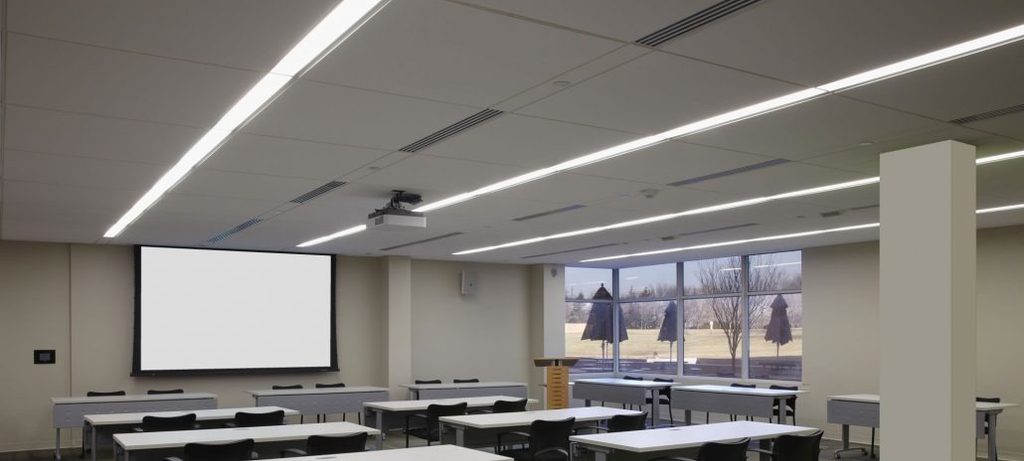
LED panels are commonly used in offices and other commercial interiors. Their broad light distribution can be suitable for rooms containing desks, meeting tables and shared work areas.
When choosing panels, businesses should consider their dimensions, mounting arrangements, light output and compatibility with existing controls.
Downlights for Smaller Spaces
LED downlights can provide a neat appearance in kitchens, corridors, reception areas and other locations where recessed lighting is appropriate.
Their suitability depends on the ceiling construction, required light distribution and the product’s installation requirements. Some installations may also require particular consideration of insulation, ventilation or fire performance.
High-Bay Lighting for Warehouses
Large industrial spaces often need lighting that can illuminate areas from significant mounting heights. High-bay LED fittings are designed for applications where suitable light distribution and output are important.
The correct arrangement depends on the building’s height, storage layout, work activities and required illumination levels.
Floodlights for Outdoor Areas
LED floodlights can illuminate entrances, yards, car parks and building exteriors. The choice of fitting should reflect the size of the area, mounting position and environmental conditions.
Motion sensors, photocells and time controls may also be appropriate in certain locations, helping manage when outdoor lighting operates.
Selecting fittings according to their intended application helps ensure the installation meets practical requirements rather than simply using the same product throughout the property.
Using Lighting Controls More Effectively
Replacing older lamps with LEDs is only one way to improve a lighting installation. Controls can also help ensure that lights operate when they are needed.
Occupancy sensors can switch lighting in response to movement in suitable areas. They may be useful in corridors, storage rooms and other spaces where occupancy varies.
Photocells respond to ambient light levels and can help control outdoor lighting as daylight changes. Time clocks provide another option when lighting needs to follow a regular operating schedule.
Dimming can offer flexibility where compatible equipment is installed. It allows light output to be adjusted according to the activity or time of day.
Before introducing new controls, it is important to check that the selected LEDs and control equipment are compatible. Not every LED lamp supports every dimmer, and unsuitable combinations can result in flickering, limited dimming performance or other operational problems.
A qualified electrician can assess the existing arrangement and advise on suitable options for the property.
Understanding Installation and Compatibility
Although some LED products are designed as direct replacements for existing lamps, others require changes to the fitting, wiring or control equipment.
For example, replacing a complete fluorescent lighting fitting with an LED panel is different from changing a compatible screw-in bulb. The work involved depends on the existing installation and the product being introduced.
Commercial properties may also contain lighting systems connected to central controls or specialist equipment. In these situations, checking compatibility before ordering replacements can prevent unnecessary expense.
Outdoor and industrial environments require additional attention to the conditions in which fittings will operate. Moisture, dust, temperature and physical exposure may influence product selection.
Electrical work should be carried out by appropriately competent professionals when installation or alteration is required. The work should comply with applicable electrical safety requirements.
Planning these details in advance helps property owners choose equipment that is appropriate for the intended location and use.
Why Professional Lighting Advice Can Help
Choosing lighting for a single room may be relatively straightforward, but larger installations often involve several interconnected considerations.
An office refurbishment may require a balance between general illumination, task lighting and control systems. A warehouse may need different fittings across storage aisles and work areas. Outdoor installations must account for the location and conditions in which the equipment will operate.
Professional advice can help identify the most appropriate fittings and determine whether existing equipment can be retained or should be replaced.
For property owners seeking an LED lighting service, it is useful to discuss the building’s current lighting, operating hours, intended improvements and any practical installation restrictions.
PP Electrical Services offers lighting installation work for domestic, commercial and industrial properties in Telford, Shrewsbury and surrounding areas. Its published lighting services include different fitting types, controlled lighting options and LED alternatives for existing installations.
Businesses and property owners can review their requirements with the company and request a quotation for suitable lighting work.
Conclusion
LED technology provides property owners with several options for improving lighting in homes, offices, commercial premises and industrial buildings. The potential benefits depend on selecting appropriate products and understanding how they will be used.
Brightness, colour temperature, energy consumption, control compatibility and installation conditions should all be considered before making a decision. For larger projects, reviewing the entire lighting arrangement can also help identify opportunities to improve consistency and reduce unnecessary electricity use.
Whether upgrading a few fittings or planning a more extensive installation, taking time to assess the property’s requirements can lead to better-informed choices. With suitable products and professional installation where needed, LED lighting can provide a practical solution for a wide range of everyday environments.
